Last updated: April 2026
A 2025 systematic review and meta-analysis published in Orthodontics & Craniofacial Research (Hussain et al.) found that white spot lesions, the chalky marks left when plaque sits on enamel too long, show up in roughly 55% of orthodontic patients during treatment, with earlier studies reporting rates as high as 68%. That number is not a scare statistic. It is a brushing problem, and it is mostly preventable.
Here is the part most articles skip: every teen we treat in Smyrna gets the same five-minute lesson at their bonding appointment, and most of them still walk in to their first adjustment with plaque packed around their brackets. Not because they are lazy. Because nobody told them what good brushing actually looks like once braces are in the picture. This article fixes that. Below is the exact 2-minute routine Dr. Gala and Dr. Baston walk every new RuCo patient through, the three mistakes we see almost every teen make, and how parents can spot a half-done job at home.
How to Brush Your Teeth With Braces in 2 Minutes
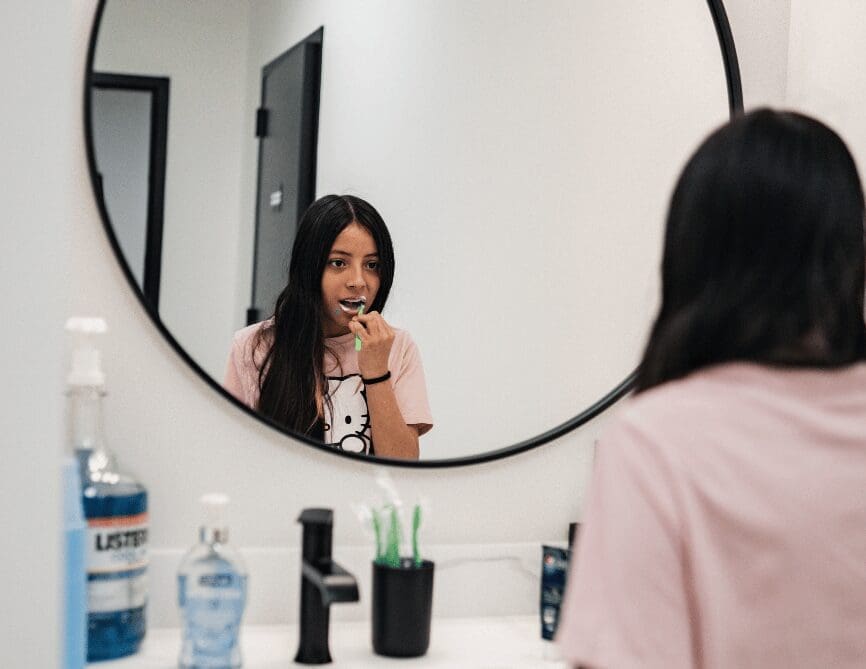
To brush your teeth with braces, hold a soft-bristled toothbrush at a 45-degree angle to the gumline, brush in small circles for 30 seconds in each of the four quadrants of your mouth, then re-angle the brush downward to clean above the brackets and upward to clean below them. Use fluoride toothpaste, brush twice a day plus after main meals, and finish with floss.
That is the version that fits in a snippet. The longer version, the one we walk through in the chair, has three parts: a swish, a structured brush, and a check. Swish with water for ten seconds before you start to knock loose food out from behind the wires. Brush in the order above. Then run your tongue over your teeth at the gumline. If anything feels fuzzy, you missed it. Brush that spot again.
Two minutes is the floor, not the goal. Most teens with braces need closer to three.
What You Need: The Right Tools for the Job
You do not need a drawer full of gadgets. You need four things that actually do the job and one that helps when the standard brush cannot reach. Here is the short list.
- A soft-bristled toothbrush, replaced every 2 to 3 months. Braces wear bristles down faster than normal, which is why we recommend swapping yours sooner than the standard 3 to 4 months. A frayed brush cleans about as well as a wet finger.
- Fluoride toothpaste. The American Dental Association recommends fluoride toothpaste for cavity prevention, and it is the single most studied tool for protecting enamel during ortho treatment. Skip the whitening pastes while in braces because they whiten only the exposed parts of the tooth, leaving an uneven shade once the brackets come off.
- An interdental brush (also called a proxabrush). This is the small cone-shaped brush that fits between the wire and the tooth. It is the closest thing to a cheat code for cleaning around brackets.
- Floss or a water flosser. Brushing alone misses the spaces between teeth. We covered the technique in detail in our flossing post, linked below.
| Tool | Best For | When You Need It | Approximate Cost |
|---|---|---|---|
| Manual soft-bristled brush | Daily cleaning, 2x per day | Always | $3–$8 |
| Electric toothbrush | Teens who rush, sensitive gums | If brushing time is a battle | $30–$200 |
| Orthodontic V-shaped brush | Around brackets specifically | Optional add-on | $5–$15 |
| Interdental brush (proxabrush) | Between wire and tooth | Strongly recommended | $4–$10 |
| Water flosser | Replacing or supplementing string floss | Optional | $40–$100 |
Here is our take: an electric toothbrush is worth it for any teen who treats brushing as a chore to finish in 45 seconds. The built-in timer does the discipline for you. Otherwise, a $5 manual brush replaced often beats a $200 brush replaced rarely.
The 3 Brushing Mistakes We See in Almost Every Teen
After more than a decade of seeing teens at six-week adjustments, the failures are predictable. They are the same three patterns, in roughly this order. Knowing the names makes them easier to catch at home.
Mistake 1: The Rinse-and-Run
The teen brushes for 40 seconds, rinses, and calls it done. The brush touched the front of the teeth and maybe the chewing surfaces. The gumline, the inside of the teeth, and the back molars never got brushed. By the next adjustment, the gums look puffy and red along the wire. That is gingivitis, the early form of gum disease, and it is the single most common thing we flag at RuCo.
The fix: Set a timer. Two minutes minimum. Most phones have a built-in stopwatch. An electric brush with a 30-second quadrant pulse does this for you.
Mistake 2: Top-of-Bracket Blindness
The brush goes side to side across the front of the brackets. The bristles never angle down to clean above the bracket or up to clean below it. After a month, you can see a faint plaque ring framing each bracket. After six months, you see the white spot lesions Dr. Gala mentioned at the top of this article.
The fix: After your normal brushing, do a deliberate pass with the brush angled at 45 degrees down toward the brackets, then a second pass with the brush angled up. Ten seconds each. This is the part the snippet routine covers, and it is the part teens skip the most.
Mistake 3: Gumline Ghosting
This is the one parents miss because the teeth themselves look fine. The teen has been brushing the visible enamel and missing the half-millimeter strip where the tooth meets the gum. Plaque collects there, the gums get tender, and they bleed when flossed. Bleeding gums are not a flossing injury. They are a sign the gumline did not get cleaned yesterday.
The fix: Tilt the brush so the bristles point at the gum, not straight at the tooth. The bristles should slightly disappear under the gum edge. That is the only way to clean where plaque actually hides.
How to Know You Actually Cleaned Them
The hardest part of teen oral hygiene is that nobody is watching the brushing. So you need a check that does not require a parent in the bathroom. Here are three that work.
The tongue test. Run your tongue across the front and back of your teeth, especially at the gumline. Clean enamel feels smooth and slightly squeaky. Plaque feels fuzzy or rough. If you feel fuzz, brush that spot again. This takes ten seconds and catches about 70% of misses.
The mirror check. Smile in the mirror under good light. Look for white film around the brackets, yellow buildup along the gumline, and any stuck food. The teen who does this once a day for two weeks builds a habit that lasts the rest of treatment.
The bleed signal. If your gums bleed when you floss, you missed the gumline yesterday. That is the single best diagnostic for whether your brushing is reaching the right place. Healthy gums do not bleed. Inflamed gums do, and inflammation comes from yesterday’s plaque, not today’s floss. Bring questions about persistent bleeding to your next adjustment so we can take a look.
Brushing With Braces on a Real Teen Schedule
The clinical version says brush after every meal. The real version is that no teen brushes at school after lunch. Here is what works in actual life.
Brush thoroughly in the morning and at night. Keep a travel toothbrush in the backpack for after lunch when possible, but if it is not, swish water aggressively for thirty seconds and chew sugar-free gum with xylitol. That handles the worst of the food trapping until you can do a real brush at home. After sports, football or basketball practice at Lee Victory Park, the same rule applies: rinse, gum, brush at home.
Sleepovers and travel are where things fall apart. Pack a brush. Non-negotiable. The rule is the same at home, at a friend’s house, at a hotel, or anywhere else, in any language: brush twice, brush longer than you think, and pair it with floss. We cover the flossing technique in detail in our how to floss with braces guide, and the full picture of what to expect during treatment is in our braces treatment overview.
Frequently Asked Questions
Can you brush your teeth normally with braces?
Mostly yes, with two adjustments. You still brush twice a day for at least two minutes with fluoride toothpaste, but you angle the brush at 45 degrees toward the gumline and add deliberate passes above and below the brackets. The total time is usually 30 to 60 seconds longer than brushing without braces.
How often should you brush your teeth with braces?
Twice a day at minimum, ideally after every main meal. Morning and night are non-negotiable. After lunch, when a full brushing is not possible, rinse aggressively with water and chew sugar-free gum with xylitol. The goal is to keep food and plaque from sitting on the enamel for more than a few hours at a time.
What kind of toothpaste should you use with braces?
Use a standard fluoride toothpaste. Skip whitening toothpastes during treatment because they will whiten only the parts of the tooth not covered by brackets, leaving uneven coloring once the braces come off. Some orthodontists also recommend a fluoride mouthwash for higher-risk patients, which we discuss at adjustment visits when needed.
Is an electric toothbrush better for braces?
For most teens, yes. The built-in 2-minute timer and quadrant pulse make consistent brushing time easier to maintain, which is the single biggest predictor of good outcomes. A manual brush works equally well if it is used correctly for the full two minutes, but in our chair experience, electric wins on compliance.
The Bottom Line
Most braces brushing problems are not technique problems. They are time-and-attention problems. Two minutes, four quadrants, two angles per bracket, and a tongue check at the end. That is the routine, and it is the same one Dr. Gala and Dr. Baston walk every new patient through at the bonding visit.
If you are about to start treatment and want to make sure your insurance covers it before your first cleaning lesson, book your free consult at RuCo Orthodontics and we will walk you through coverage, treatment, and yes, the brushing routine, all in the same visit. Hablamos español.
About the Author
Dr. Anish Gala, Board-Certified Orthodontist, American Board of Orthodontics
Dr. Gala is the co-founder of RuCo Orthodontics in Smyrna, Tennessee, with more than a decade of experience treating teens and adults across Rutherford County. He sees patients in the office every day, alongside Dr. Sasha Baston, and personally walks each new patient through their hygiene routine at the bonding appointment.