
Last updated: April 2026
The honest version: most teens who walk into an orthodontist’s office for braces leave with one of two things, traditional metal brackets or clear ceramic brackets. The other “types of braces” you read about online (lingual, gold, self-ligating, clear aligners) are real, but they are not always real options at every practice, and they are not always the right call even when they are.
This article walks through all five common types of braces, what each one does, and what an orthodontist will likely recommend for your specific situation. No marketing fluff, no false equivalence between options that work for 90% of teens and options that only fit very specific cases.
What Are the 5 Types of Braces?
The 5 main types of braces are:
- Traditional metal braces. Stainless steel brackets bonded to the front of each tooth, connected by an archwire. The most common, most affordable, and most predictable option.
- Ceramic (clear) braces. Same mechanics as metal, but the brackets are tooth-colored or clear ceramic. Less visible, slightly larger, slightly more expensive.
- Lingual braces. Brackets bonded to the back of the teeth instead of the front. Hidden from view, but rare in U.S. practices and not appropriate for every case.
- Self-ligating braces. Either metal or ceramic brackets that use a built-in clip instead of small elastic ties. More of a bracket design choice than a separate type.
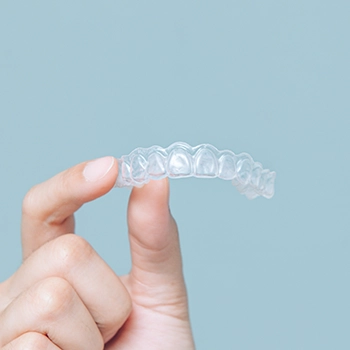
- Clear aligners. Removable plastic trays (Invisalign and similar brands) that gradually shift teeth. Not technically braces, but searched alongside them constantly.
The full picture below covers what each one actually involves, who it’s right for, and what an orthodontist’s honest recommendation usually looks like.
Traditional Metal Braces: The Default for a Reason
Traditional metal braces use stainless steel brackets bonded to the front of each tooth, with a flexible archwire running through them and tiny elastic ligatures (the colored bands teens get to pick) holding the wire in place. Adjustments happen every six to eight weeks.
There is a reason metal is still the most-recommended option for teens. It works for the widest range of cases, including complex bite issues, severe crowding, rotations, and anything else clear aligners struggle with. It costs less than the alternatives. And it does not require the teen to remember to do anything (no removing trays, no losing trays, no compliance gap).
Modern metal brackets are smaller and lower-profile than what most parents remember from their own teen years. The brackets are smaller, the wires are gentler, and the colored bands let teens make the experience their own. We have written about that side of treatment in our braces colors guide for parents who want the full picture there.
Cost-wise, metal braces are typically the most affordable type of orthodontic treatment, which we cover in detail in our braces cost breakdown. For a typical 18 to 24 month case, metal is the option insurance covers most consistently.
Our take: if your teen does not have strong feelings about visibility, metal is the default for a reason. It works, it lasts, and it does not require anything from the patient beyond brushing well and showing up to adjustments.
Ceramic (Clear) Braces: The Quiet Compromise
Ceramic braces use brackets made of tooth-colored or clear polycrystalline ceramic instead of stainless steel. The mechanics are identical: brackets, archwire, ligatures, six-to-eight-week adjustments. The only real difference is what they look like.
For self-conscious teens, especially older teens approaching high school graduation or photo-heavy social years, ceramic is a fair compromise. The brackets blend into the natural tooth color, and from a normal conversational distance, they are noticeably less visible than metal. Up close, you can still see them, but the visual impact is meaningfully reduced.
The trade-offs are real. Ceramic brackets are slightly larger than metal brackets, which can mean a small adjustment period for comfort. They are more brittle, which means they can chip if a teen bites into something hard they should not have. And the elastic ligatures around the brackets can pick up staining from coffee, tea, dark sodas, or curry sauces, which is more visible on clear ligatures than on colored ones.
Cost runs higher than metal, typically by a few hundred to a thousand dollars depending on the case. Insurance coverage tends to be the same as metal, but any difference between metal and ceramic pricing usually comes out of pocket.
The honest call: ceramic is a real option, especially for upper front teeth where visibility matters most. Some practices put ceramic on the top arch and metal on the bottom to balance aesthetics with cost.
Clear Aligners: When They Work and When They Don’t
Clear aligners (Invisalign is the most-known brand, but ClearCorrect and others exist) are a series of custom-fit plastic trays that the patient wears 20 to 22 hours per day, swapping to a new tray every one to two weeks as the teeth gradually shift. They are removable for eating, brushing, and flossing.
Aligners work well for mild to moderate cases: minor crowding, small spacing, light alignment touch-ups. We offer aligners at RuCo for cases that genuinely fit them, and you can read more on our clear aligner treatment page.
Where aligners struggle: complex bite correction (severe overbites, underbites, crossbites), significant rotation, large gaps, vertical tooth movement, and cases where teeth need to be extruded or intruded vertically. Aligners apply gentler force in fewer directions than brackets, which is the trade-off for being removable.
The compliance issue is the part nobody mentions. Aligners only work if the teen wears them 20 to 22 hours a day. Every meal, every snack, every sip of anything but water means trays out, brush, trays back in. Teens who treat aligners casually end up extending treatment by months, sometimes by years. That is not a marketing claim. It is something we see at consultations every month from patients who started aligners elsewhere and want to switch.
Our take: aligners are a great option for the right case and the right patient. For a self-disciplined teen with a mild to moderate alignment issue, they can be excellent. For a complex case or a teen who is not going to wear them religiously, traditional braces will finish faster and cost less.
Lingual, Self-Ligating, and Gold Braces: What You Should Know
This is where most “types of braces” articles oversell the options. Here is the honest picture of the rest of the field.
Lingual Braces
Lingual braces are bonded to the back of the teeth instead of the front, making them invisible from the outside. They are real, they work, and they are uncommon. Most U.S. orthodontic offices do not place them, because they require additional specialized training that is not part of standard orthodontic education. Lingual braces are typically more expensive than metal or ceramic, can affect speech temporarily (lisps are common in the first few weeks), and can irritate the tongue.
Honest take: lingual is a legitimate option for adults in image-conscious professions, performers, or older teens who specifically need invisible treatment and have a case that fits. For most teen cases, it is overkill. RuCo does not currently place lingual braces, and most independent practices in middle Tennessee do not either.
Self-Ligating Braces
Self-ligating brackets use a built-in clip or sliding door to hold the archwire in place, instead of small elastic ligatures. Brand names like Damon are the most-marketed examples.
The marketing claims (faster treatment, fewer appointments, less friction) are mixed in the research. Some studies show modest differences. Most show treatment time and outcomes that are roughly comparable to traditional brackets. Self-ligating is a real bracket design, but it is more accurately described as a variant of metal or ceramic braces than a separate “type.”
Honest take: if your orthodontist uses self-ligating brackets and recommends them for your case, they work. If a practice is heavily marketing self-ligating as a major treatment difference, ask specific questions about how it changes outcomes for your case. Often, it does not change much.
Gold Braces
Gold braces are stainless steel brackets with a champagne-gold finish. They are a cosmetic choice, not a clinical one. Mechanically, they work the same as metal. Some patients like the look. They tend to cost more than standard metal.
Honest take: this is novelty. If a teen wants gold braces and the family is fine with the cost, no clinical reason to say no. Just know it is a style choice, not a treatment upgrade.
Which Type Is Right for Your Teen?
A decent shorthand for thinking through this:
- Most teens, most cases, best value: Traditional metal braces.
- Teens who care about visibility, willing to pay more: Ceramic on the upper teeth at minimum.
- Mild to moderate alignment, disciplined wearer: Clear aligners, with realistic expectations.
- Complex bite correction, severe crowding, or significant rotation: Traditional metal braces. Aligners and lingual options are not the right call.
- Image-conscious adult or specialty case: Lingual is worth asking about, but expect higher cost and limited practice availability.
The actual answer comes from the consultation. A good orthodontist will look at your teeth, the bite, the complexity of the case, and your priorities, and give you a real recommendation. A bad consultation pushes whichever option carries the highest margin. Ask why the doctor is recommending what they are recommending, and ask what the trade-offs are.
For a fuller picture of what to expect during teen treatment, our braces for teens guide covers the full process from consultation through adjustments.
Frequently Asked Questions
What is the most common type of braces?
Traditional metal braces are the most common type, by a wide margin, especially for teens. They work for the widest range of cases, cost the least, and require no compliance from the patient beyond regular brushing and showing up to adjustments. Ceramic braces are the second most common, particularly for older teens and adults.
Are clear aligners the same as braces?
Not technically. Braces use brackets bonded to the teeth and an archwire that applies continuous force. Clear aligners are removable plastic trays that the patient wears 20 to 22 hours per day. Both are forms of orthodontic treatment, and they are often searched together, but the mechanics, cost, and ideal cases are different.
Do ceramic braces stain?
The brackets themselves do not stain. The elastic ligatures (the bands holding the wire to the bracket) can pick up staining from coffee, tea, dark sodas, and curry-based foods, especially if you choose clear ligatures. Ligatures get replaced at every adjustment, so any staining is temporary, but it is the most-cited frustration with ceramic.
Which type of braces works fastest?
Treatment time depends mostly on the complexity of the case, not the type of braces. For comparable cases, traditional metal and ceramic braces tend to finish in roughly the same window, typically 18 to 24 months. Clear aligners can take longer for borderline cases, especially when teen compliance is inconsistent.
The Bottom Line
There are five real types of braces, but for most teens, the actual decision is between two: metal or ceramic. Clear aligners are a strong third option for the right cases. Lingual and gold braces exist, but they are specialty choices for specific situations.
The fastest way to find out what is right for your teen is a free consultation where Dr. Gala or Dr. Baston looks at the case directly and gives you a real recommendation. We will tell you what is appropriate, what is overkill, and what your insurance covers, all in the same visit.
Book your free consult at RuCo Orthodontics and we will walk you through the options that actually fit your case. Hablamos español.