Last updated: April 2026
Your dentist just said to see an orthodontist. Your kid is 8. You’re wondering if that’s too early, or if you’ve somehow already missed something.
You haven’t. And it’s not too early.
Here’s the thing about orthodontic timing: the age question is really a development question. Most kids get braces between 11 and 14 years old, when most of their permanent teeth are in. But the right time for a first evaluation is earlier than most parents expect, and earlier than most people act on.
Dr. Gala and Dr. Baston see kids at every stage in our Smyrna office, from 7-year-olds coming in for their first look to 15-year-olds whose families wish they’d come in sooner. This is what the timeline actually looks like.
What’s the Right Age for Braces?
Most kids get braces between 11 and 14 years old. That window is when the majority of permanent teeth have come in, the jaw is still actively developing, and teeth are highly responsive to orthodontic movement.
That said, “right age” varies by individual. Some kids are ready at 10. Others are better off waiting until 13 or 14. What we’re looking at is tooth eruption, jaw development, and the specific issues that need correcting, not a birthday.
The American Association of Orthodontists recommends that every child have an orthodontic evaluation by age 7. Not because most 7-year-olds need braces, they don’t, but because some problems are much easier to address when caught early. Age 7 is when a trained orthodontist can first see how the bite and jaw are developing.
Why Orthodontists Recommend Evaluations at Age 7
Age 7 is when a child typically has a mix of baby teeth and permanent teeth, what’s called a mixed dentition. For most kids, it looks like this: the first permanent molars are in, and the upper and lower front teeth have started coming in.
This combination gives an orthodontist a clear picture of how the teeth and jaws are tracking. We can see crossbites developing. We can see crowding that will only get worse. We can see jaw width issues that are far easier to address at 8 than at 13.
At RuCo, the majority of 7- and 8-year-olds we evaluate don’t need any treatment yet. We see them, take a quick look, give the parents an honest assessment, and schedule a check-in for a year or two later. No pressure, no treatment plan, no surprise cost conversation.
But some kids, maybe 10 to 15% of the ones we see at that age, have something specific going on that genuinely benefits from early action. Crossbites, severe crowding, certain bite problems. For those kids, catching it at 8 instead of 12 makes a meaningful difference in the complexity and duration of their eventual treatment.
The evaluation is free at our Smyrna office. There’s no downside to coming in early.
Signs Your Child Might Need Braces Earlier Than Average
You don’t need to wait for a dentist referral to notice some of these. Parents often see them first.
Early or late loss of baby teeth. Baby teeth that fall out significantly ahead of or behind the typical schedule can affect how permanent teeth come in. If teeth are coming in crooked or crowded, an evaluation is worth doing.
Difficulty chewing or biting. Kids shouldn’t regularly avoid certain foods because of how their teeth come together. If your child bites their cheek often, or chews primarily on one side, that can signal a bite problem worth looking at.
Mouth breathing or snoring. While not always orthodontic in origin, narrow jaw development can contribute to mouth breathing. An orthodontist can assess whether jaw expansion is appropriate.
Visible crowding or spacing. If you can see that permanent teeth are coming in crooked, overlapping, or in unusual positions, that’s worth having evaluated. Not necessarily to start treatment, but to know where things are heading.
Crossbite or underbite. If your child’s lower teeth sit in front of their upper teeth when they bite down, or if their teeth visibly don’t meet correctly, that’s something we want to see sooner rather than later. Crossbites in particular are significantly more manageable when the jaw is still growing.
Phase 1 vs Phase 2 Treatment: What’s the Difference?
This terminology comes up a lot in orthodontics and confuses a lot of parents. Here’s the straightforward version.
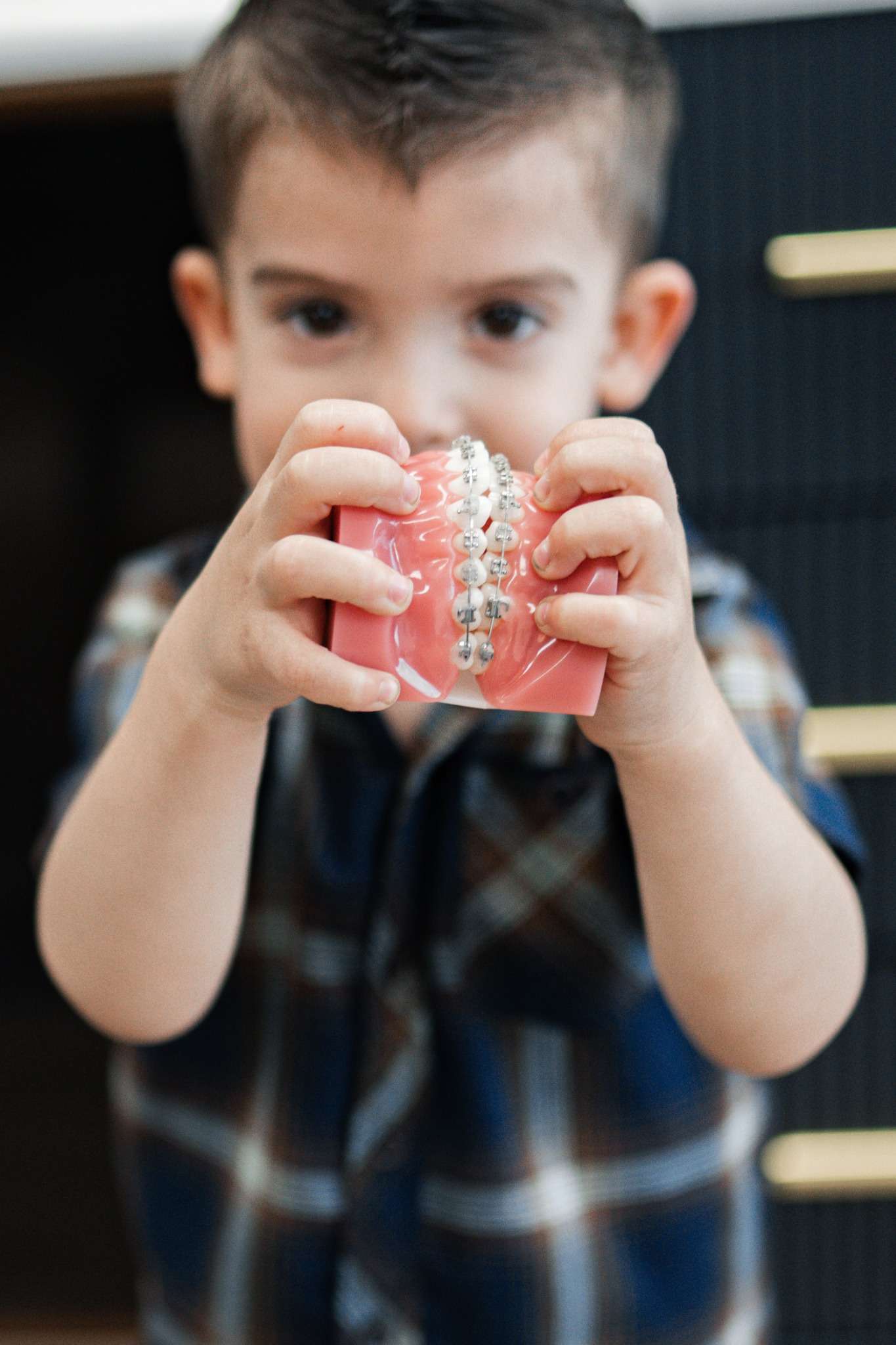
Phase 1 treatment (also called early interceptive treatment) happens while a child still has a mix of baby and permanent teeth, typically between ages 7 and 10. It’s not full braces. It usually involves appliances like expanders or partial braces designed to address a specific problem: creating space for permanent teeth, correcting a crossbite, or guiding jaw development. Phase 1 treatment is targeted and has a defined endpoint. Not every child needs it.
Phase 2 treatment is what most people think of when they think of braces. It happens once most or all permanent teeth have come in, usually between 11 and 14, and involves comprehensive orthodontic treatment to fully align the teeth and bite.
Some kids need both phases. Most only need Phase 2. When we evaluate a young child, we’re partly asking: is there something here that benefits from Phase 1 intervention, or is this a “watch and wait, then do Phase 2 when they’re older” situation?
| Phase 1 | Phase 2 | |
|---|---|---|
| Age range | 7 to 10 | 11 to 14 (typical) |
| Teeth present | Mix of baby and permanent | Mostly permanent |
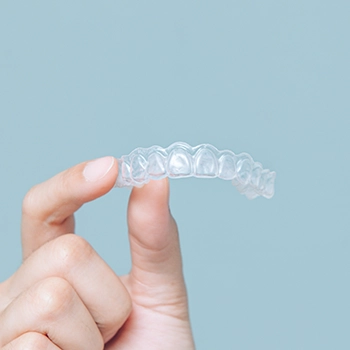
| Appliances | Expanders, partial braces | Full braces or aligners |
| Goal | Address specific early problem | Full alignment |
| Every child needs it? | No, maybe 10 to 15% | Most kids, yes |
What to Expect at Your Child’s First Orthodontic Evaluation
A first evaluation at RuCo takes about 30 to 45 minutes. There’s no drilling, no injections, nothing your child needs to be anxious about.
Dr. Gala or Dr. Baston will look at your child’s teeth, take photos, and review any x-rays. We’ll walk you through exactly what we see: what’s developing normally, what we’re watching, and whether any treatment is recommended now or in the future. If there’s nothing to do yet, we’ll tell you that. If we see something worth addressing, we’ll explain why, what it involves, and what the cost looks like.
The consultation is free. We’re in-network with most major insurance plans. There’s no obligation to start treatment at the first visit or any visit.
Book your child’s free evaluation at our Smyrna office, or read more about our kids orthodontics and teen orthodontics services.
Frequently Asked Questions
Is 7 too early to see an orthodontist?
No. The American Association of Orthodontists recommends a first evaluation at age 7. Most 7-year-olds won’t need any treatment yet, but early evaluation allows an orthodontist to spot problems that are easier to address before all the permanent teeth are in.
What’s the best age for braces?
For most kids, the best age for braces is between 11 and 14, when most permanent teeth have erupted and the jaw is still actively developing. The ideal timing varies by individual and is determined at an orthodontic evaluation, not by age alone.
What if my child is already 13 and hasn’t seen an orthodontist?
It’s not too late. 13 is actually in the middle of the most common treatment window. Come in for a free evaluation and we’ll give you an honest picture of what treatment would look like, how long it would take, and what it would cost.
You don’t need to have this figured out before you come in. That’s what the evaluation is for. Schedule your free consultation at RuCo Orthodontics in Smyrna and we’ll give you the honest picture. No pressure, no upsell.